

I’m not an arrogant person, I don’t think there’s anyone who would call me that. But I struggle with humility.
When I think of humility - I see an image of a monk, smiling and bowing lightly. I am far from being a monk. Maybe this association is too rigid for an embodiment of humility. Anyway, this article is not about the term itself, but about the way workplace cultures often use the language of humility. So here it goes…
I find it difficult to be proud of my work and my achievements in the culture of humility. I find it difficult to embody the competence and confidence that I possess. I strongly feel that in this context pride and humility cannot coexist.
And the conflict I see is that in the workplace pride is often equated with ego, while the general concept of “not being an asshole” is tied to humility. And my question is - isn’t it too narrow of a range?
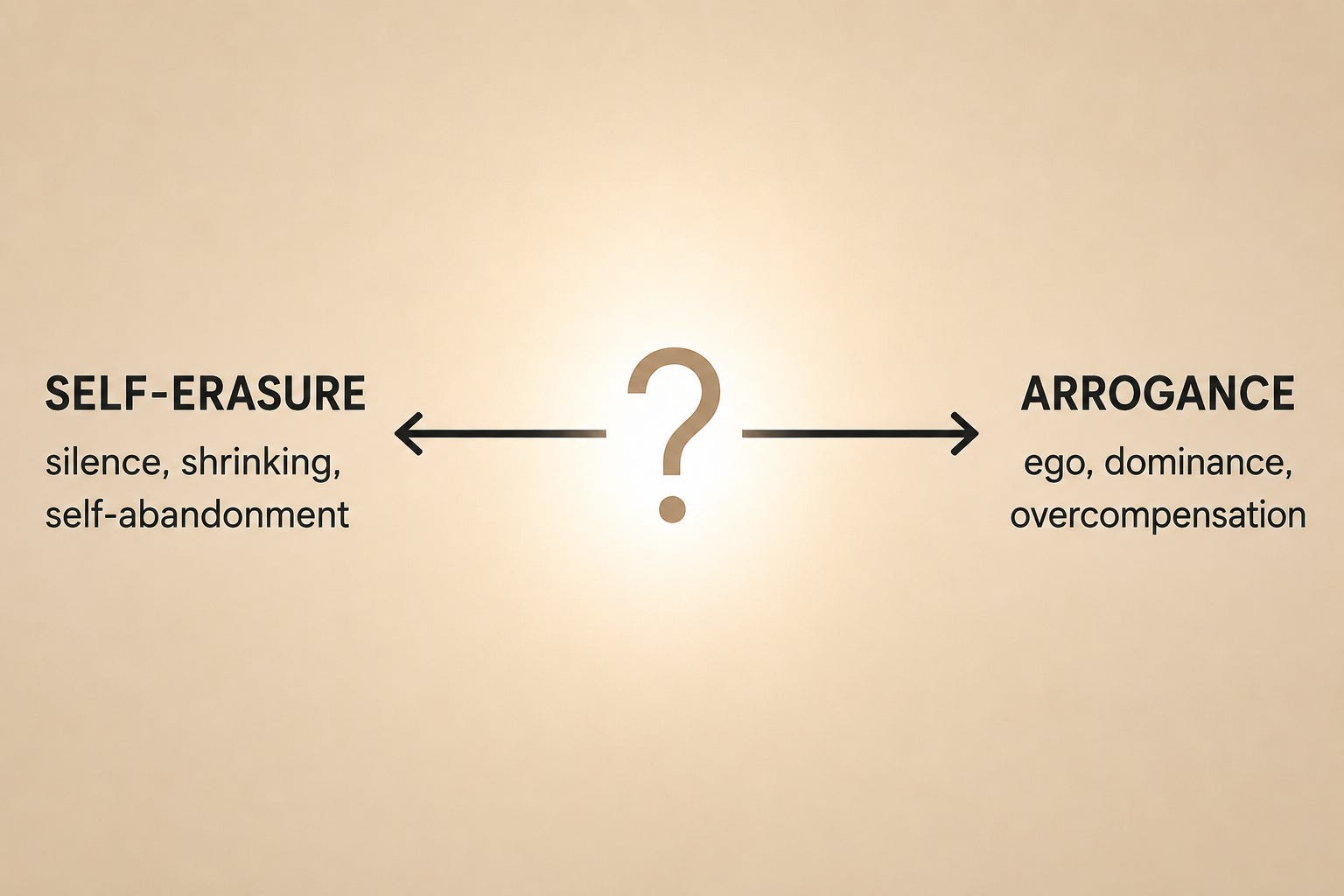
In my opinion, arrogance and humility are somewhere on the opposite ends of the same spectrum. So why do we stick to extremes? I am quite sure there are other points of character/state that are between those two, that are very socially acceptable. Where does even confidence go?
Yes, arrogance isn’t helpful at all in work environments, but humility doesn’t seem like an obvious go-to solution as well.
Because in corporate and tech environments, people are expected to thrive, to strategize, to innovate, to push forward, to think outside the box, to make bets, to win arguments, to pivot, to make decisions that make money. For all that - Does it help to just move on after completion of something significant? Does it help to not get credit? Does it help to stay quiet rather than speak up? Does it help to be only visible when you are needed? Does it help to not challenge anything? Does it help to… shrink?
How does humility help to own your results and achievements? It looks like there’s also a contradiction with ownership in general.
Where does authenticity go?
Authenticity requires variation. If the application of humility includes conformity and compliance - then humility and authenticity can’t coexist.
Is it humility or…fear, in fact? Impression management? Avoidance of criticism? Self-erasure?
That’s the epitome of my angst.
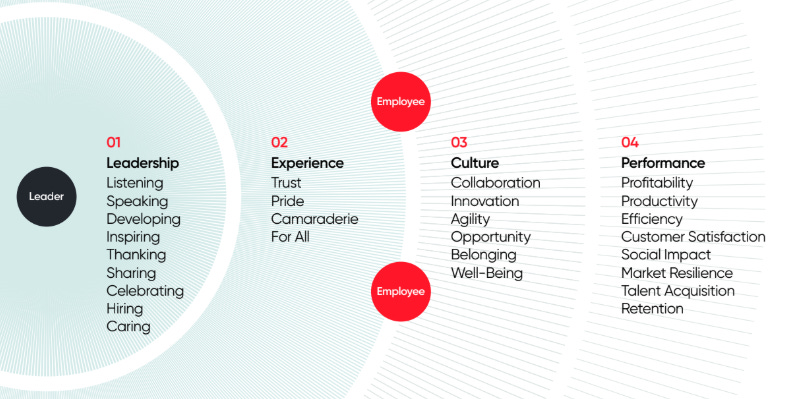
While working on my previous article I saw something that made the stars shine in the night sky (and made me feel immensely validated). Great Place To Work Institute published a business case where they show Pride in their approach to building high trust & high engagement culture, putting it in quite a central spot of their model.
Exhibit1:
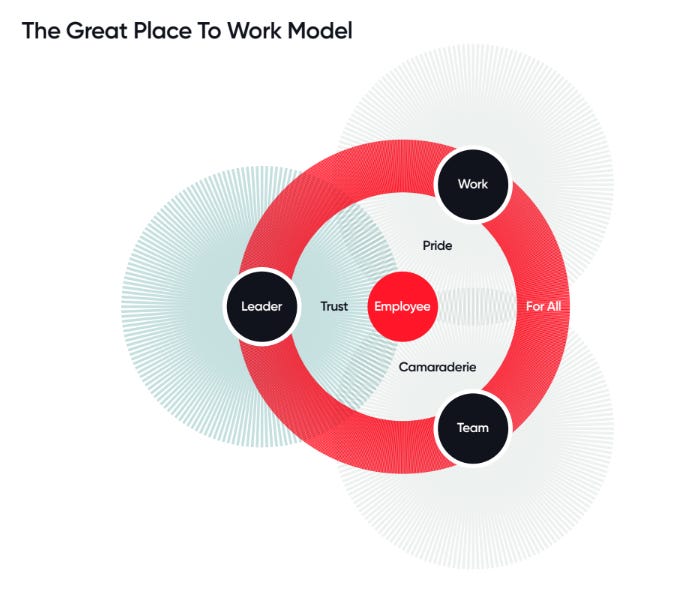
Exhibit 2:
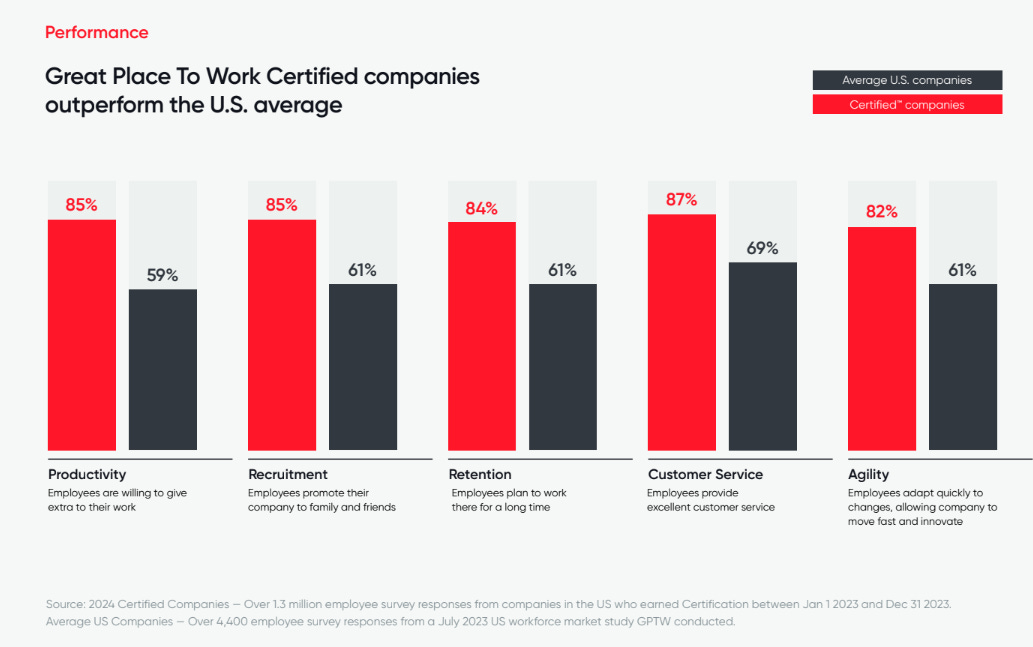
And it looks like they know what they’re talking about, judging by the performance of the companies they have worked with and/or certified:
So should we look at the possible spectrum again? I think we should.
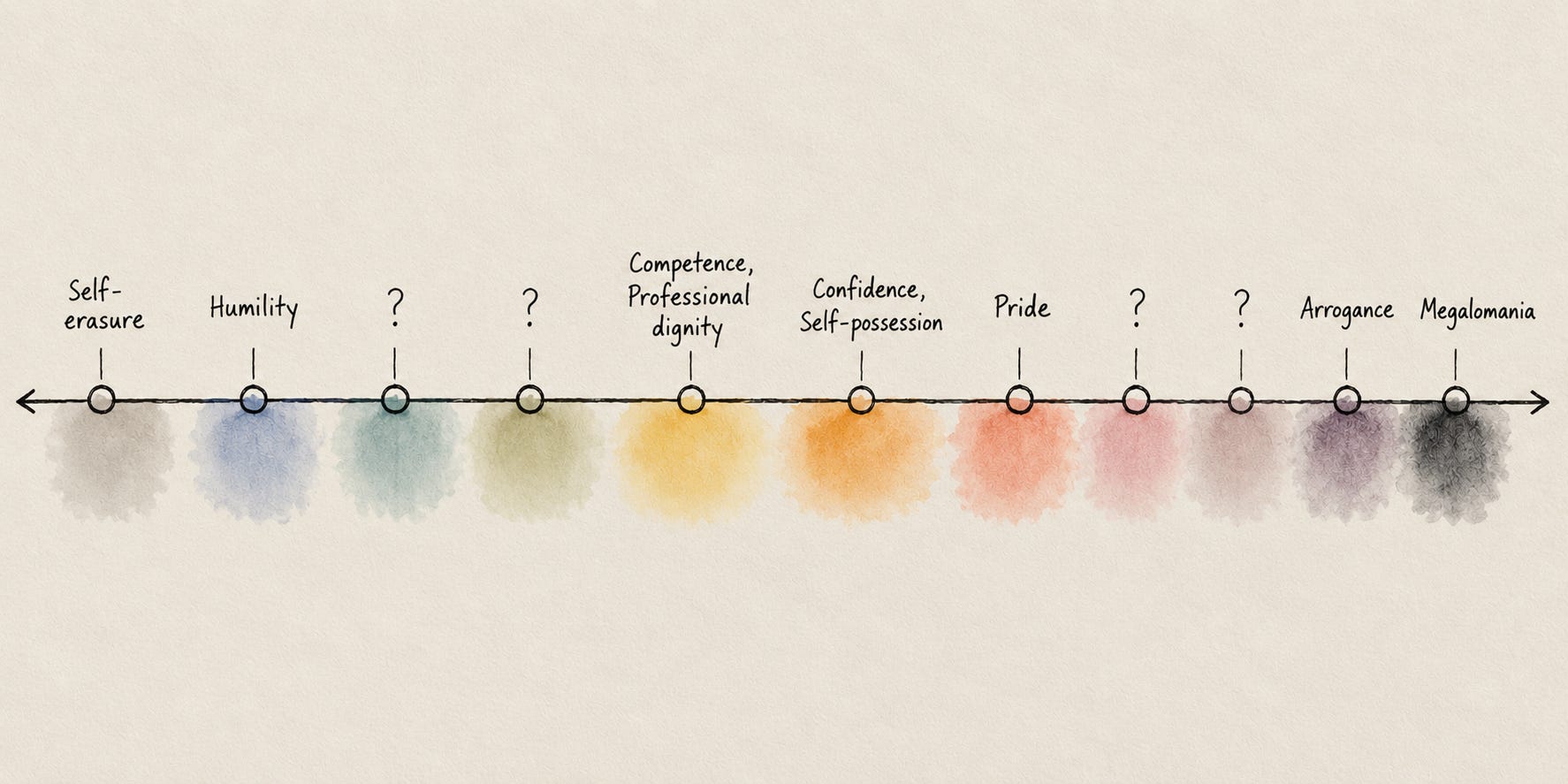
Maybe something like this.
I also find the culture of humility to be connected to the existence of personality-based feedback (obviously not as the main perpetrator, but as an accomplice) that distributes asymmetrically across genders. And quite a lot of leaders recruit, promote, and tolerate only as much capability as their own sense of security allows.
Disclaimer: I actually don’t intend to make this article about gender. I bring it up because women have often been expected to embody the very qualities that humility cultures celebrate very well before they had the right to work, making the consequences easier to observe.
Textio’s research on feedback bias shows exactly that: women receive the most unhelpful and biased feedback around confidence, likability, assertiveness, and authority.
Exhibit 1:
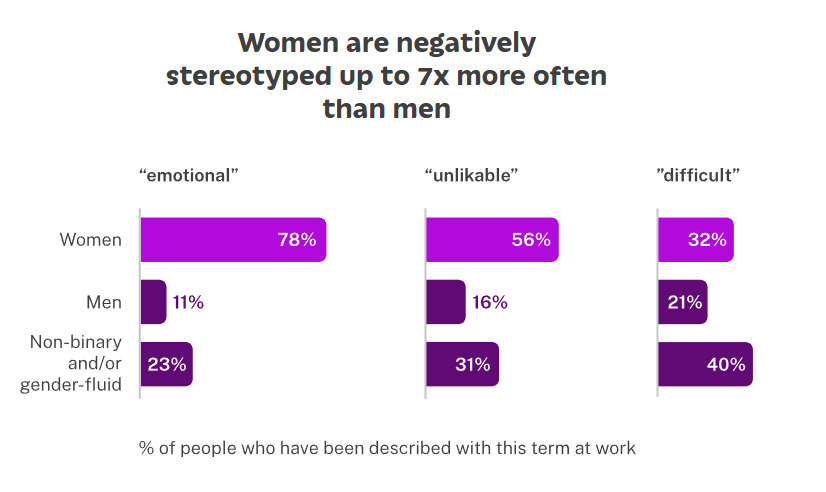
Exhibit 2:
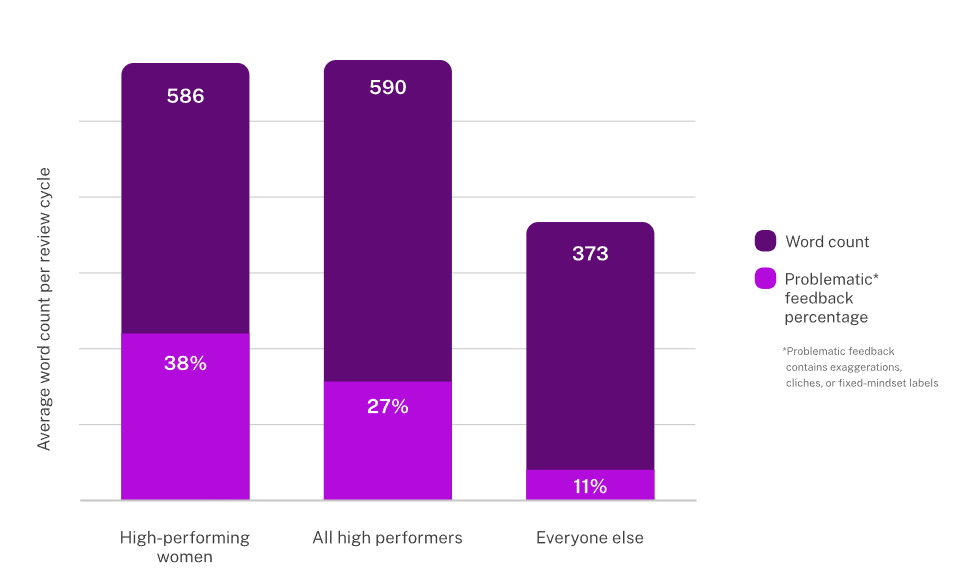
Almost everyone saw Cynthia Nixon’s video “Be a Lady They Said“ - a very accurate stereotypical image of reality. Same-same-but-different in many workplaces… It is always a wonderful journey to discover the extent to which your personality is both too much and not enough depending on the company. With this my gender rant is over.
In conclusion, humility culture creates subjective personality criteria to measure people by which opens the door to judgment of everyone. After all, humility does have a religious subtext in it, and some popular religions rely heavily on judgement and guilt. And with this my “religious” rant is over.
— “If all the other kids jumped off a cliff, would you jump too?” - I keep hearing in the back of my mind.
— Mmmmm… depends on how much they’re paying (joking-joking…).
Many parents I know tried to teach their children to think critically for themselves. And ironically it goes against all attempts of conformity most of us have been exposed to during school and higher education years. All that to come to a company that wants you to be just like everybody else - don’t make a mess, don’t be too self-reliant, don’t be selfish, don’t rock the boat. And I get it, I really do. Some status quo’s are that precious.
Do you know someone who wants to do great work and to be able to display their sincere happiness and pride without fear of judgement? I do too.
Interestingly I never built my teams’ culture using humility, frankly I never really needed it. And I love to work with senior ICs and leaders, I love to work with opinionated, vibrant people. Everyone is welcome as they are - as their authentic selves.
Arrogance is never an issue when the culture is built on ethics, empathy, integrity, ability to think critically of yourself, trust, accountability, and psychological safety. As a result, engagement, performance, and sense of camaraderie are usually just… chef’s kiss.
So maybe then there’s no need for oversimplified labels to build and uphold the culture?
What does a culture of humility actually give an organization? Does it truly exist to make everyone comfortable?
Britnei Nicole has an interesting point about that.