

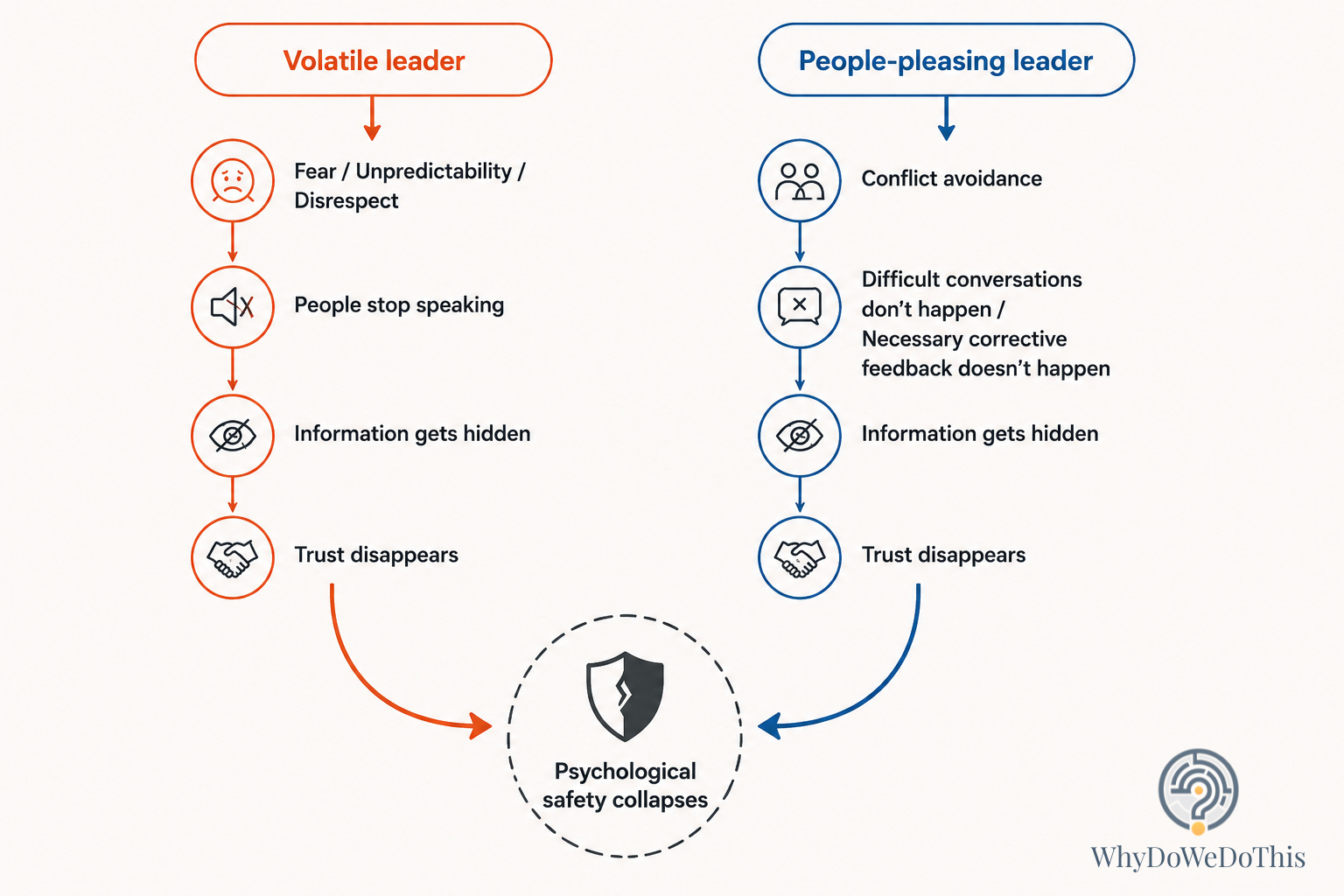
I don’t think there’s a lot to say about volatile leaders that many don’t know yet. Nowadays their model of operation has turned unproductive while at some point it might have been perceived as “strong” or “passionate” or “assertive”.
As I love Spiral Dynamics as a very elegant principle of a collective mind and values evolution, let’s look where this leader persona sits:
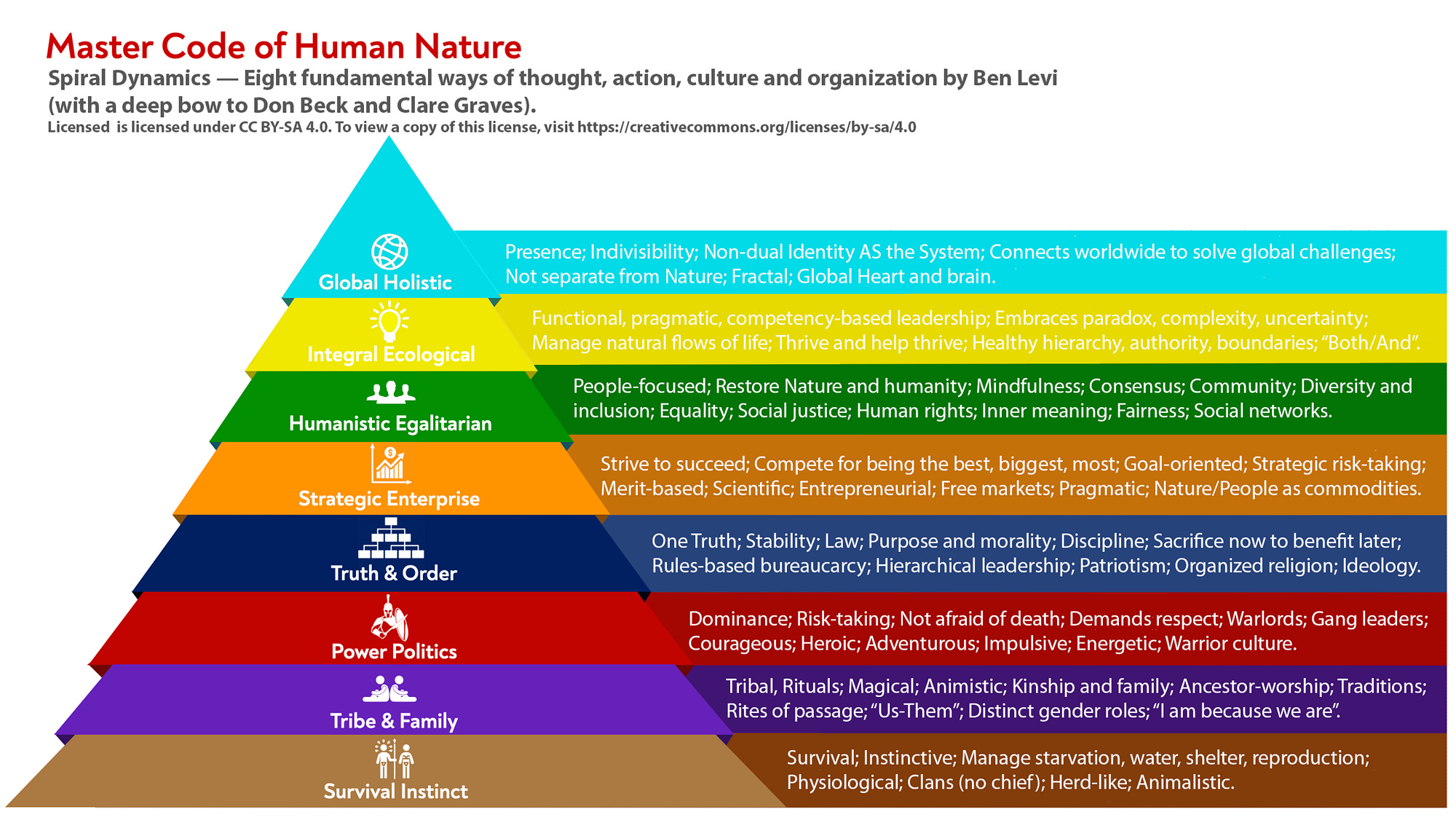
Within this model a volatile leader usually lives in individual Red and communal Blue. Before today these leaders were the ones that were “making” people work and doing sacrifices for individual power or collective results. At the times when work was less governed and structured, and a prevailing management belief was that “others” don’t work enough, or just want the money, or are lazy, or need to be made to do more for less - was a regular work culture, these leaders were the “doers”. If we step outside ordinary white-collar and blue-collar workplaces - think religious or cultist structures, the military, gangs - we find environments where strong discipline is required, hierarchy is rigid, only one “truth” can exist, and the operating principle is “might makes right”.
The economic miracle in a post-war Japan was achieved in a Blue culture according to D.Beck and C.Graves, so obviously not everything is simply black or white, and elements of cultures that we might be judgmental about today - were necessary at some points of prior ideological evolution.
Now that the corporate culture mostly moved into competition/success fueled values or social rights/networks ideology (Orange and Green groups) - volatile leader’s modus operandi is mostly irrelevant. Those motivated by achievements and competitive spirit will be chasing success without a person holding a whip, those who thrive for equality and a better shared future are driven by the ideology itself. A strong and scary type is mostly disruptive in these environments.
Characteristics of volatile leadership and culture it produces:
The leader is explosive, unpredictable, and emotionally intimidating.
People spend more energy avoiding their anger than doing good work.
Culture is fear-driven or disrespect-driven.
People stop speaking up because it’s dangerous.
People optimize for self-protection.
The flow of information stops.
Decision quality deteriorates.
Low engagement and quiet quitting.
Psychological safety is absent.
Trust cannot live here, however there are those who would still play a losing game and try to win this leader’s trust.
Why am I talking about people-pleasing leaders here? These are probably the biggest group I came across in my experience - which is one reason. Another reason is that people-pleasers and volatile people are players on the same field which enables the behaviors of both groups.
Yes, I am talking about the Karpman’s drama triangle:
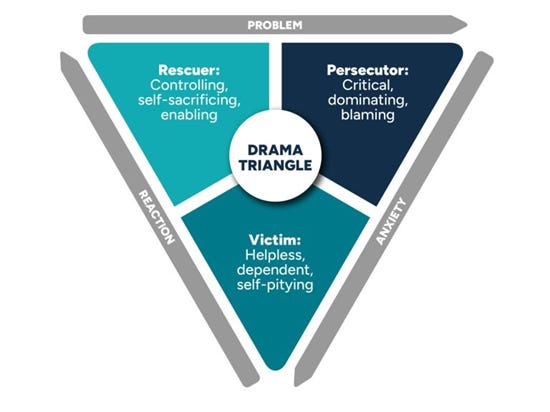
One is an obvious villain, the other is a victim proving themselves sometimes with no avail.
Then the victim brings out the rescuer in yesterday’s persecutor. And then they switch places.
Participants in the triangle usually play two roles depending on the circumstance - a victim can become a persecutor very quickly, a persecutor can act as a victim, persecutor becomes a rescuer, or a victim becomes a rescuer - round and round we go (well, they go).
What I am saying is that usually volatile people and people-pleasers are deeply rooted into the triangle dynamic. So if one sees both types in one organization having strong interpersonal relationships, and one doesn’t like to play inside the triangle - then exit is the best solution.
When talking about people-pleasers in corporate environments I think it’s important to at least separate them into two groups: anxious people-pleasers, and strategic (political) people-pleasers. Anxious ones usually aren’t malicious by nature, while the strategic ones can get very intentionally manipulative and therefore uninteresting for this conversation. Just not enough contrast with volatile leaders for me to write about (joking-joking… but not enough to keep on about them).
So, anxious people-pleasers… I know many think that they are simply nice people, and I don’t disagree. What does it do to a company culture - is another question entirely.
This is the person who tries to avoid conflict or any unpleasant situation that may lead to a conflict.
This is the person that avoids giving negative (corrective) feedback.
This is the person that instead of direct collaborative communication chooses to rather leave an indirect comment that can be perceived as a complaint and potentially derail someone’s career.
This is the manager that is always nice to you and then you get fired.
The tradeoff of an anxious people-pleaser is short-term comfort over long-term outcomes - comfort usually wins.
Characteristics of people-pleasing leadership and culture it produces:
Avoids conflict and difficult decisions (Forbes article getting further into it).
Says “yes” to everyone, creating impossible expectations.
Accountability disappears because nobody wants to upset anyone.
Creates ambiguity.
People stop speaking up because with time they see that speaking changes nothing (thecenterforconsciousleadership.com talks more about it).
Difficult conversations never happen.
Conversations that could lead to a disagreement are avoided.
Small issues remain unaddressed until they blow up into an organizational scale problem.
Due to a lack of corrective feedback teams get blindsided with negative consequences.
Psychological safety and trust also disappears because no one functionally knows what is going on.
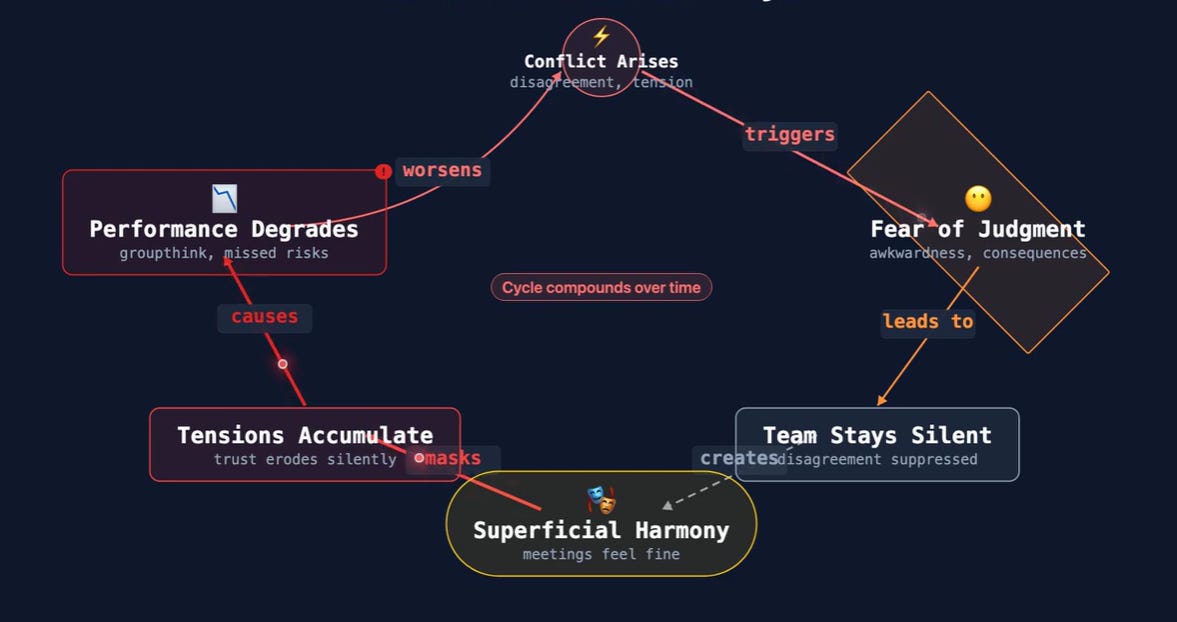
In the end, avoiding discomfort doesn’t eliminate conflict. It simply transfers its cost onto someone else.
I think I struggled the most with this type of leader. Even on the same level of hierarchy I was blindsided so many times it’s hard to count. And many times I thought “omg why can’t you just talk to me…” that there’s an issue. But as they say:
Seriously though, I can’t put blame here. Anxious people-pleasing is often a survival mechanism. My humble beginnings in leadership started exactly as an anxious leader. I know how it feels. It’s like you are doing something good but at the same time you are constantly stressed, and bracing. I know what I was doing wrong even though I thought that I was doing the best I could. I definitely learned my lessons.
So what changed?
It started in a very unconventional company about which I will probably write a separate article at some point. In short we all were very confused, stressed and uncomfortable there as the company was intentionally creating operational ambiguity and assigning to us very peculiar intellectual challenges all the time. It was also very cold there all the time due to productive-male-brain-required temperatures :-/. We thought it was a social experiment of some kind. The comfort zone was impossible to reenter. And I think this experience fried me so hard that I didn’t have the energy or capacity for people-pleasing. I did burn out there. And yet this is the place that I remember with immense love. I have never learned this much in such a short time in my life. After working in that company I felt I could do anything at all - the structure of thinking and the number of frameworks this place hotwired into my head was incomparable with what I had before while already having a 10-year career tenure. The professional self-confidence it created was chef’s kiss (finally). Easily one of the best places I have ever worked in, although I wouldn’t recreate the same experience for anyone else xD.
And then there was another experience in a different company where I stayed for a long while. Shortly after joining the company I got a very big scope and a very fair org capacity to manage it. I was an innate problem solver and the clarity of my communication was very high after the previous experience I had. I was highlighting problems and risks and the company was giving me resources to solve them. I had a carte blanche to hire people and with time I had a very strong team. Some of the people I chose already worked with me in my previous roles, I knew their level of work ethics and output quality. I liked the management and the freedom they were giving us and like this it became a place where I deeply cared about business outcomes, relationships with the top management, and of course happiness of my new team.
In this setup a people-pleaser in me could not play a “comfort hide-and-seek”. The mission became more important than my discomfort.
I was rebuilding someone’s reputation in the eyes of leadership, I was advocating for salaries, I was arguing for better work conditions, I was working on team performance and having difficult conversations with them, I had to fire some of the people that I personally invited to the team.
At times I was very uncomfortable for both sides I am sure - I was saying things that they wouldn’t want to hear. But the communication was always honest and open, the company as a whole made a very good effort to support that culture. My team mates could grab me at any time and use me as a shoulder to cry on or as a witness to scream at a situation, almost the same was happening on the other end. There were problems as anywhere else, but trust - trust and psychological safety were present, and it meant so much.
Thinking back on it I can’t say that I made a conscious decision from people-pleasing anxiety towards psychological safety. It was more of a knee-jerk reaction at the time to go into the direction of transparency and integrity - it felt right. And maybe then for the first time - it felt right for the right reasons. The feeling of peace and calm I was having by not executing in the old people-pleasing pattern was creating a very different quality of life and work for me. It’s like you are hearing some sort of static all the time that makes you brace, makes you annoyed, and then it just stops and you start experiencing life differently - you can see colors and hear music you know. Anyway...
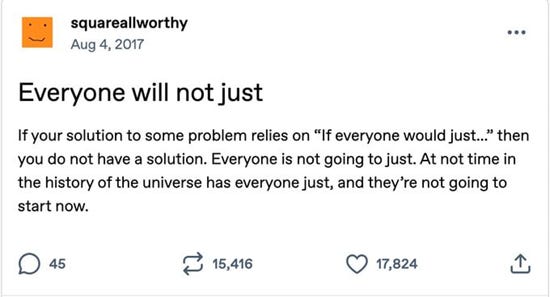
I also did a lot of therapy and had organizational psychology counseling at the time, so things were certainly not happening “just” or “by themselves” but rather an accumulated effort that has gotten me to a right place.
The path to integrity is easy - when the conditions are right.
In overall conclusion to this reflection I’d say this:
People-pleasing leaders and volatile ones couldn’t seem more different.
One leads through fear; the other through avoidance.
With time their teams start exhibiting the same behaviors.
Why?
Because psychological safety isn’t about kindness. It’s about whether people can take interpersonal risks.
Both leaders make those risks feel unsafe - just for different reasons.
Truth becomes expensive.
Risks get hidden. Decisions degrade. Performance follows.